Ananta vs Genshin, Wuthering Waves & ZZZ
Where Ananta sits relative to the dominant gacha-anime titles — and the design inspirations the producer cited across Tokyo Game Show 2025. Every contrast is from official communications, never an invented benchmark.
Ananta in one paragraph
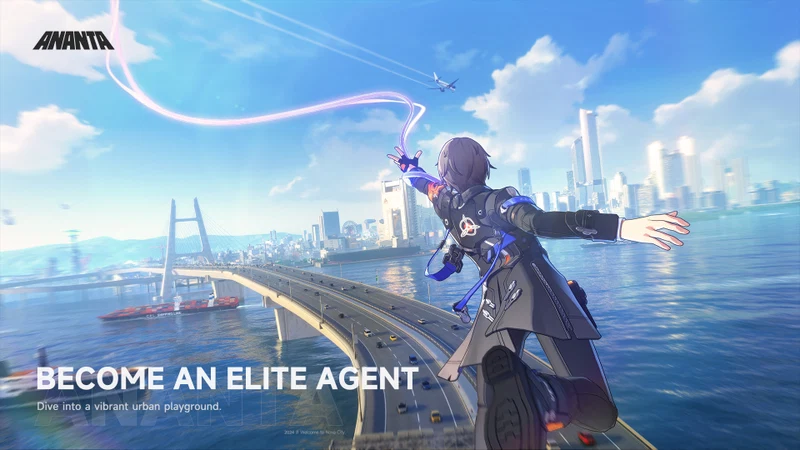
Ananta is the non-gacha urban open-world action RPG in NetEase Games' anime-style portfolio. The pitch — repeated by producer Ash Qi across the September 2025 TGS interviews — is to deliver high-freedom open-world traversal and full character access without a banner-pull system.
Ananta vs the gacha-anime field
Where Ananta sits on every axis players already know from the competing titles.
- Ananta vs Genshin Impact
Both target a global anime audience and ship on PC + PS5 + mobile, but Genshin uses a five-star banner gacha for characters; Ananta unlocks every character through story progression or open-world encounters.
- Ananta vs Wuthering Waves
Both feature high-mobility real-time combat with character switching. Wuthering Waves keeps a gacha layer; Ananta does not. Ananta also leans harder into urban open-world density and day-job progression loops.
- Ananta vs Zenless Zone Zero
Both run urban settings and team-based ensembles. ZZZ uses a banner gacha; Ananta does not. Ananta's traversal is open-city 3C, ZZZ's is hub-based instanced.
- Ananta vs Tower of Fantasy
Both run open-world MMO-adjacent settings. ToF uses banner gacha for characters and weapons; Ananta uses neither and is explicitly framed as solo-at-heart with optional co-op.
- Ananta vs Grand Theft Auto VI
Both deliver urban open-world chaos with vehicles and weapon-wheel firearms. GTA is paid premium with no free-to-play layer and adult R-rated tone; Ananta is free-to-play, anime-style and uses 'Maniac Chaos' supernatural framing instead of crime drama.
Cited design inspirations
Design influences grouped by gameplay axis — a mix of titles producer Ash Qi explicitly cited and comparisons widely drawn by the press.
- Combat
Sleeping Dogs — Hand-to-hand free-flow combat with environmental props. Sifu — Combat focus and learn-by-failing pacing. Batman: Arkham series — Free-flow rhythm combat baseline. Jackie Chan / Hong Kong action cinema — Choreography vocabulary for prop-based finishers — explicitly cited by producer Ash Qi.
- Traversal
Marvel's Spider-Man — Skyscraper-to-skyscraper grapple-swinging — directly inspired the Captain's Chaos-tendril mechanic. Prototype / Prototype 2 — Ash Qi's childhood reference for free-form urban traversal.
- Open world
Grand Theft Auto series — Weapon-wheel firearm selector, vehicle theft, urban chaos baseline. Yakuza series — Dense urban environments, sub-story density, mini-game culture.
- Ensemble & story
Marvel's Avengers — Team-based ensemble character framing. Uncharted series — Set-piece pacing and cinematic action beats.